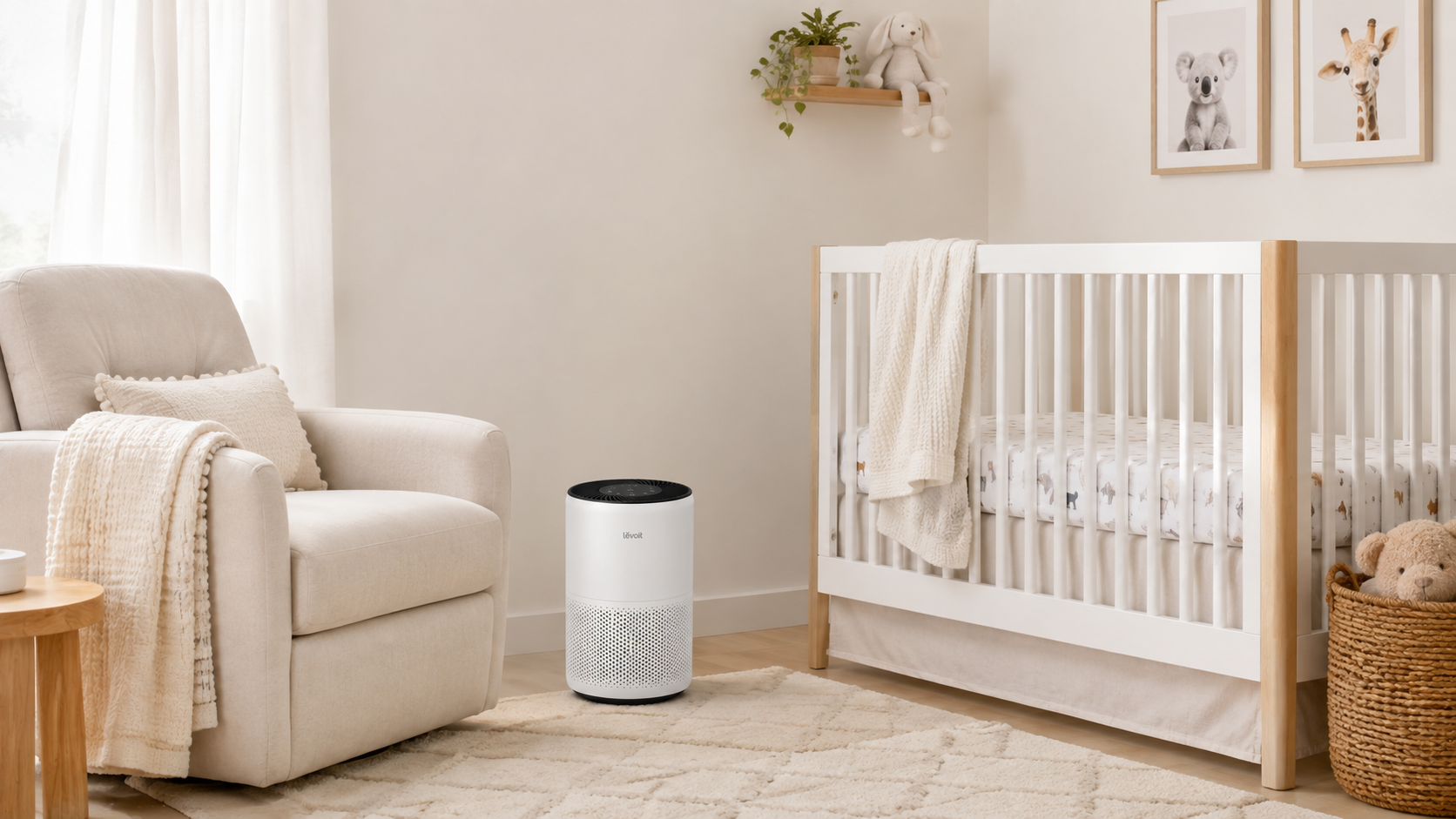
Picture this: it’s 2 a.m., your toddler is coughing from allergies, and you’re standing in the nursery wondering if that $100 air purifier you saw online actually does anything. That’s the exact question behind the LEVOIT Core 300, one of the most popular budget HEPA purifiers on the market. It’s built for small spaces, priced for real family budgets, and covers rooms up to roughly 215 to 219 square feet at its best performance level [1][2]. But does it hold up in the room that matters most, your kid’s room? Let’s break down what the data and expert reviews actually say.
What the Core 300 Actually Does Well
The Core 300 earns its reputation as a compact, quiet performer that’s genuinely good at pulling dust and pollen out of the air in small to medium rooms [1][2]. That’s not a small thing if you’ve got a kid with allergies or a nursery that collects dust faster than you can clean it. Consumer Reports has tested the unit directly, and it holds up as a legitimate contender in the budget HEPA category rather than just another Amazon bestseller riding on hype [1].
The unit is rated for a CADR (clean air delivery rate) commonly listed around 135 CFM for smoke, dust, and pollen, which lines up with its small-room positioning. Levoit also markets it as capable of up to 5 air changes per hour in a room close to 219 square feet. That’s a meaningful number for a nursery or a single kid’s bedroom, since more air changes generally mean fresher air, faster.
Here’s the honest opinion part: this isn’t a whole-home solution, and it was never designed to be one. If you’re trying to clean the air in an open-concept living room and kitchen combo, you’ll want something bigger. But for a single bedroom or nursery, the coverage math works in your favor.
The Real Cost Nobody Talks About Upfront
The sticker price on the Core 300 looks great. What doesn’t always get mentioned in the glowing five-star reviews is what happens six months later, when the filter needs replacing.
The Core 300-RF replacement filter is rated for roughly 6 to 8 months of typical use. Genuine replacement filters typically run $20 to $30 each. At two filters a year, you’re looking at roughly $40 to $60 annually just to keep the thing running the way it should. That’s not a dealbreaker, but it’s real money, and it’s the kind of detail that budget-conscious parents deserve to know before they buy, not after.
One practitioner summed it up well in community discussions: the unit works great for bedroom allergies, but filter costs need more careful budgeting than expected. That’s the honest tradeoff here. You’re not getting a “buy once, forget it” appliance. You’re getting a low upfront cost with a recurring subscription-like expense baked in.
- Upfront unit cost: budget-friendly compared to premium purifiers
- Filter lifespan: approximately 6 to 8 months per filter
- Annual filter cost: roughly $40 to $60 per year
- Power draw: low to moderate, described as tens of watts at higher fan speeds and single-digit watts on low or standby
Is It Actually Safe and Practical for a Nursery?
Parents ask this question for good reason. A nursery isn’t just another room, it’s where your baby sleeps most of the day. The low-to-moderate power draw matters here, since it supports running the unit overnight without a huge spike in your electric bill or a noisy, disruptive hum keeping anyone awake.
Aggregated buyer reports describe running the Core 300 overnight in a child’s bedroom specifically to reduce allergy flare-ups, and in nurseries to keep dust levels down around infants. Reported outcomes, while anecdotal and not clinical, include fewer stuffy noses, less visible dust on furniture, and better sleep for light sleepers. That last point matters a lot if you’ve got a baby who wakes at the slightest sound.
That said, there’s a catch worth flagging honestly. Fan noise at the highest speed can be too loud for light sleepers, especially when the unit sits close to a crib or bed. My take: run it on low or medium overnight in a nursery, and save the high setting for daytime cleaning bursts when nobody’s trying to nap. It’s a small adjustment, but it makes a real difference in a small room where the purifier is sitting just a few feet from where your child sleeps.
Where the Core 300 Falls Short
No product is perfect, and pretending otherwise would be doing you a disservice. The most consistent complaint across expert and user reviews is limited odor and VOC removal compared to units with more activated carbon. If you’re dealing with pet smells, diaper pail odors, or general household funk, the Core 300 isn’t going to be your best tool for that job.
This is a purifier built for particulates, dust, pollen, and similar airborne debris, not for smell control. If odor is your primary concern, you’ll want to look at a unit with a more substantial carbon filter layer.
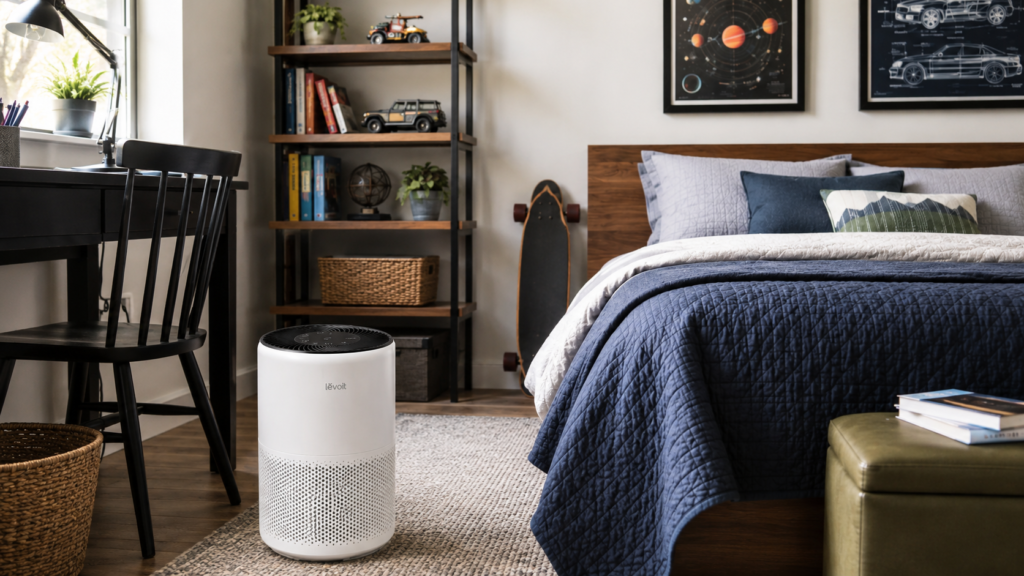
The other honest limitation is coverage. Don’t expect this unit to handle a large playroom or a combined bedroom and play space much bigger than 219 square feet. Manufacturers love to stretch coverage claims, but the real-world sweet spot here is a standard nursery or a single kid’s bedroom, not a converted garage playroom.
Core 300 vs. Core 400S: Which One Should You Actually Buy?
If you’ve shopped for this purifier at all, you’ve probably seen its bigger sibling, the Core 400S, in the “customers also bought” section. Reviewers frame these two as a classic good-better pairing: the Core 300 for budget and small rooms, the Core 400S for medium-to-large rooms with smart features built in.
The Core 400S is described as a strong mid-range smart HEPA purifier, effective for larger spaces, quiet on auto or low settings, but it comes with its own tradeoffs, namely higher filter costs and occasional app quirks. If your nursery or kid’s room is on the smaller side and you don’t care about app controls, the Core 300 is the more sensible buy. If you’re trying to cover a bigger shared kids’ space or want smart home integration, the step up might be worth the extra cost.
A common pattern among households is using the Core 300 as a starter or secondary unit, one per bedroom, paired with a larger main purifier for open living spaces. That’s a smart way to think about it if you’ve got multiple kids in separate rooms and don’t want to buy the premium model for every single space.
What the Reviews Actually Say (And Why That Matters)
Nearly all shoppers, 95%, say online ratings and reviews influence their purchase decisions, and consumer electronics along with home and garden products are categories where reviews are especially useful. That’s not surprising if you’ve ever tried to buy a purifier and gotten lost in a sea of near-identical Amazon listings.
The Core 300 backs up that trust with volume. Aggregate customer ratings typically land between 4.6 and 4.8 stars across major retailers, drawn from tens of thousands of individual reviews. That’s a meaningful sample size, and it suggests the positive experiences reported by parents running this in nurseries and kid’s rooms aren’t a fluke.
Independent testing from Consumer Reports and RTINGS also backs the general consensus: this is a legitimately capable small-room HEPA purifier, not just a marketing win [1][2]. When expert lab testing and tens of thousands of everyday user reviews land in roughly the same place, that’s a good sign you can trust the recommendation.
Frequently Asked Questions
Is the LEVOIT Core 300 safe to run overnight in a nursery?
Yes, based on its low-to-moderate power draw and design for continuous small-room use. Run it on low or medium speed near a crib to avoid the noise level some users report at the highest fan setting.
How often do I need to replace the filter?
The Core 300-RF filter is rated for roughly 6 to 8 months of typical use, which usually works out to about two filters per year for most households.
Will it get rid of diaper or pet odors in a kid’s room?
Not particularly well. Expert and user reviews consistently flag limited VOC and odor removal as a weak point. It’s built to handle dust, pollen, and similar particulates, not smells.
What size room does the Core 300 actually cover?
It performs best in rooms up to roughly 215 to 219 square feet, which fits most standard nurseries and single kid’s bedrooms but won’t be enough for a large playroom or open-concept space.
Bottom Line for Budget-Conscious Parents
The LEVOIT Core 300 earns its spot as a solid, affordable pick for a nursery or kid’s bedroom, as long as you go in with realistic expectations about filter costs and odor limitations. It’s not a whole-home solution, and it’s not going to erase every smell in a diaper-filled room. But for dust, pollen, and everyday allergy relief in a space under 220 square feet, it does what it promises.
If you’re weighing this purchase against other home tech for your kid’s space, take a look at how it fits into your broader nursery setup, from monitors to humidifiers, before you commit to a full room refresh.
Sources
- Levoit Core 300 Air Purifier Review (consumerreports.org)
- Levoit Core 300 Review – RTINGS.com (rtings.com)
Researched from 26 vetted sources · average source authority DR 80
